Story2026/09/17
Five football pitches full of medication – and one system for emergencies
Millions of packs of medicines are stored in Burgdorf. Some of them are intended for the moment when the market can no longer guarantee supply. How this compulsory stock works and is drawn upon, why it is far from being a dusty emergency reserve, and what role the Galenica network company Alloga plays in supplying Switzerland.
In the event of a cough and a high fever, the doctor prescribes antibiotics. But production at the manufacturer has currently ground to a halt, and the pharmacy is temporarily not receiving any supplies. Such shortages do not only affect antibiotics: in 2025, companies in Switzerland reported 218 disruptions to the supply of medicinal products. In 127 cases, the federal government released what are known as compulsory stocks in order to ensure supplies for patients.
From antibiotics and painkillers to cancer treatments
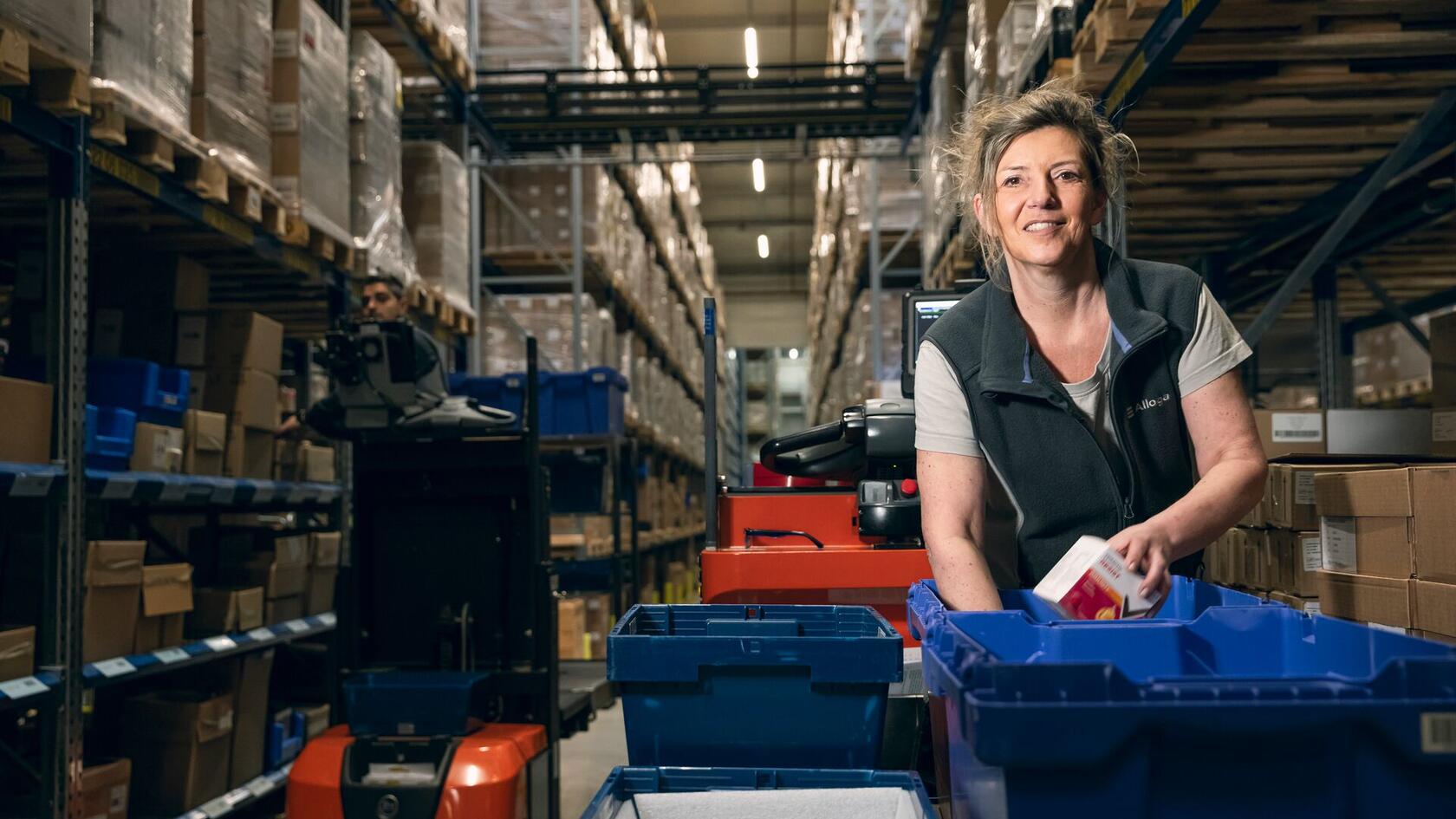
Some of this reserve is located in Burgdorf, in a warehouse the size of five football pitches. Responsible for this is Bernhard Megert, who heads up Alloga Ltd., a pharmaceutical logistics company within the Galenica Group, on an interim basis. Alloga stores and manages medications here for around 100 pharma companies. Around 100 million packs leave the warehouse every year – half of all medicines sold in Switzerland.
Some of these belong to the statutory compulsory stock: pharma companies are currently required to stock 120 active substances, ranging from antibiotics and painkillers to cancer treatments. The list has been growing for years due to increasing supply bottlenecks. Compulsory stock is not automatically released: the federal government only releases the reserve when the market is unable to cope with a disruption itself.

“Here, compulsory stocks aren’t just supplies sitting somewhere waiting to be used. They are part of our day-to-day business.”
Not a bunker, but a cycle
Many people imagine compulsory stock as a separate reserve gathering dust somewhere. Megert sets the record straight: “Here, compulsory stocks aren’t just supplies sitting somewhere waiting to be used. They are part of our day-to-day business.” Specifically, this means: Alloga does not store compulsory stock goods separately, but in the middle of the normal warehouse. The system always dispatches the goods with the shortest expiry date first, new batches follow. As a result, the stock is regularly replenished.
If a pharma company notifies Alloga of a compulsory stock quantity, Alloga records it in the system. If the stock drops to this quantity, the system automatically blocks any further orders. In this way, the reserve remains protected without anyone having to monitor it manually.
Helvecura, the compulsory stock organisation of the pharmaceutical industry, organises the compulsory stockholding system for therapeutic products. It concludes the necessary contracts with the obligated pharma companies and monitors stock levels. Alloga ensures that the reported compulsory stock levels are correctly managed, protected and ready for inspection in day-to-day business. However, it is not Alloga or Helvecura that decides to release the stock, but the federal government. “We are never the owners of the medicines,” emphasises Megert. His team assumes operational responsibility: It stores the medications, documents the stock levels and ensures that the stocks are ready for inspection.
When the network comes into play
“As part of the Galenica Group, we benefit from greater crisis management, a strong IT infrastructure and experts from a wide range of fields,” says Megert. In an emergency, Alloga is therefore not alone, but is embedded in a network that includes other Galenica companies.
Sudden peaks in demand, such as during a strong flu epidemic, show just how resilient the system is. Then the demand for fever-reducing painkillers increases rapidly and the available supplies need to get to the right locations quickly and precisely. According to Megert, however, the real test often only begins afterwards: “At times like this, orders often start to pile up at our end. When the supply is restarted and the first deliveries arrive, we have to work through the backlog of orders in addition to our day-to-day business. That requires capacity.”
Who pays for the reserve stocks?
The question of costs, however, remains unresolved: Because the federal government sets drug prices, the pharmaceutical industry cannot pass on the costs of compulsory stocks through higher prices like other industries. Today, it largely bears these costs itself. The revised National Economic Supply Act could provide some relief here in the future, as it opens the way for new financing solutions. This offers a ray of hope for the industry: Broader cost support would help to keep the compulsory stockholding system viable in the long term.
According to Megert, security of supply is not something that is created only when a crisis hits. “It is created every day through people, processes and systems that work together reliably.” The federal government, Helvecura, pharma companies and the Galenica network: it is only their interaction that makes a system strong enough to be able to make a difference for months to come in an emergency.
How supply with medicine works despite shortages
What to do if an important medication is missing? Supply bottlenecks have long been part of everyday life in Swiss pharmacies. How Galenica is helping to secure supply in Switzerland.
You might also be interested in this

A new gem joins the network: Galenica acquires Bären Apotheke am Zytglogge
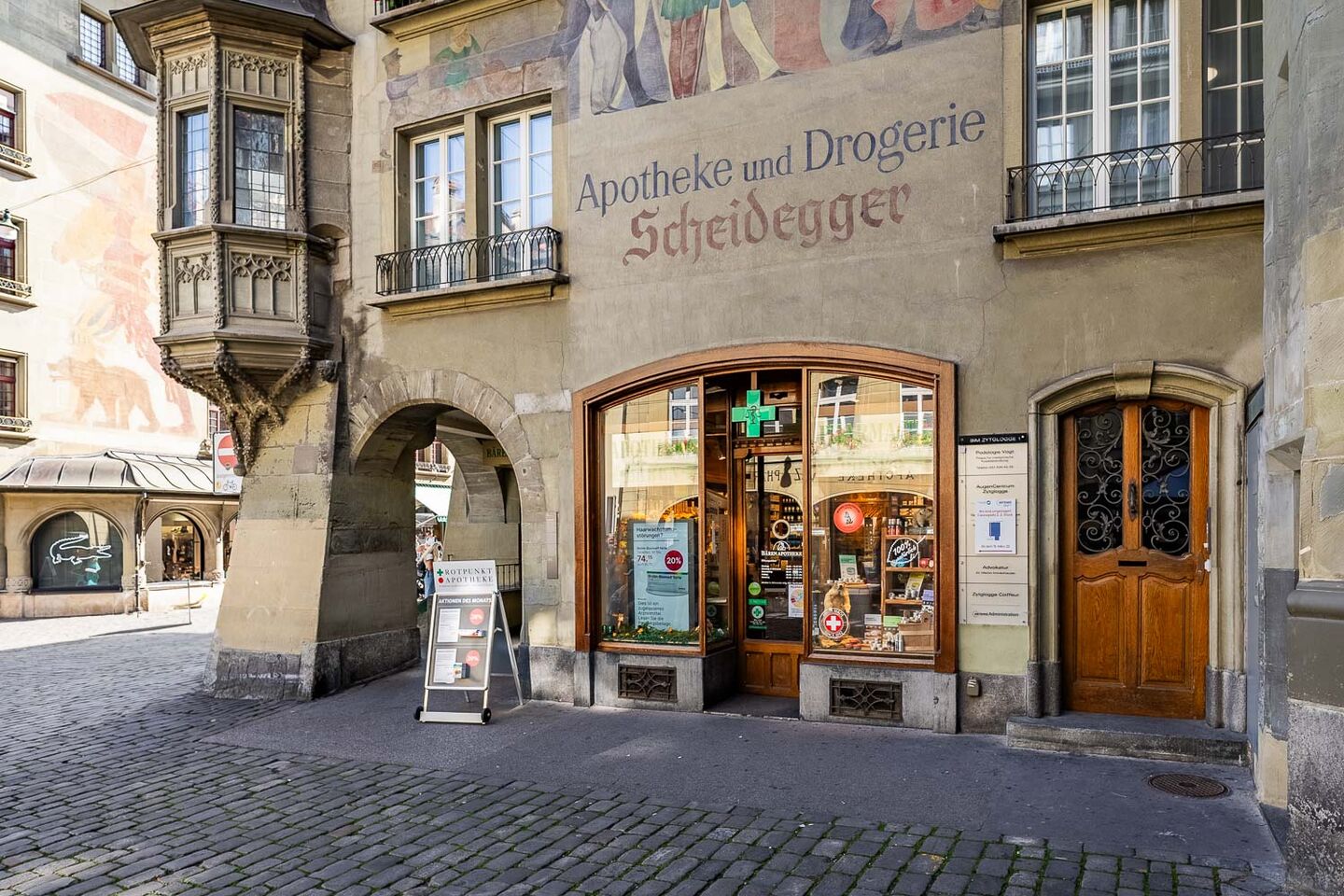
The long-established Bären Apotheke am Zytglogge has been part of Bern’s cityscape for generations. Since 1 September 2026, it has been part of the Galenica network and continues to operate under the name “Bären Vita Zytglogge” with a new concept. This preserves a piece of Bern’s history while opening up new prospects for its future.

Creating New Spaces in Harmony with Our Culture
The world of work is constantly evolving, and Galenica is evolving with it. As part of our transformation, we are actively shaping the future. This is reflected not only in the way we collaborate, but also in the environments in which we work.


Coordinated basic care: From pilot projects to system solutions
Collaboration between different healthcare providers is already being tested in numerous pilot projects. One recent example is the Baselland supply model, which also involves participation from pharmacies in the Galenica network. The task going forward is to develop these approaches systematically and translate them into sustainable, broad-based system solutions. Daniele Madonna, Chief Pharmacies Category Management & Health Services, called for this step at this year’s Healthcare Professionals Initiative on 5 June 2026.

Sun Store Renens: First pharmacy in Western Switzerland to introduce the new concept
With the redesigned Sun Store pharmacy in Renens (VD), the first pharmacy in Western Switzerland is opening with a completely new concept. It places a strong focus on personalised advice, healthcare services and the overall customer experience. The aim is to further improve people’s access to low-threshold primary care services.